Think about the last time a project missed its deadline, a commitment slipped through the cracks, or a team member quietly checked out. More often than not, accountability—or lack thereof—was somewhere in the equation.
Employee accountability is the invisible force that keeps organizations moving forward. When people own their work, take pride in their outcomes, and hold themselves to high standards, everything works better. That means teams communicate more openly, leaders spend less time firefighting, and the business builds the kind of resilience that outlasts market disruptions.
This guide breaks down what accountability really looks like in practice, what gets in the way of it, and how to build it into the fabric of your culture.
What Employee Accountability Really Means and Why It Matters
Accountability at work is often misunderstood as being about blame: who dropped the ball; who didn’t deliver. But that framing misses the point entirely. Real accountability means taking full ownership of your responsibilities, your decisions, and your outcomes. It means saying “I’ve got this” and meaning it. It also means being honest when things go sideways, learning from it, and doing better.
Accountable employees bring something distinct to a team: reliability. When colleagues know they can count on each other to follow through, trust builds quickly. And trust is the foundation on which everything else rests, e.g., collaboration, innovation, and psychological safety.
Research consistently shows that employees who feel genuinely responsible for their work are more engaged, more motivated, and more productive. They don’t wait to be told what to do next. They anticipate, act, and adapt.
The business case is equally compelling. Teams with strong accountability cultures experience fewer performance issues because problems get caught and addressed earlier, often by the employees themselves. Managers spend less time policing outputs and more time coaching and developing their people. Turnover tends to drop because high performers stay where standards are upheld and effort is recognized. In short, accountability doesn’t just make individuals better. It makes the whole organization healthier.

The Role of Managers in Supporting Accountability
Here’s a truth that often gets overlooked: accountability starts with managers. Before they can ask their team to own their outcomes, managers need to own theirs. That means modeling the behaviors expected of employees, often by showing up prepared, following through on commitments, and being transparent when things don’t go to plan.
Practically speaking, managers create accountability through clarity. Vague expectations are one of the fastest ways to undermine it. When team members aren’t sure exactly what “success” looks like for a given role or project, they can’t be meaningfully accountable for it. Managers need to specify clear goals, communicate them explicitly, and make sure every person understands how their work connects to the bigger picture.
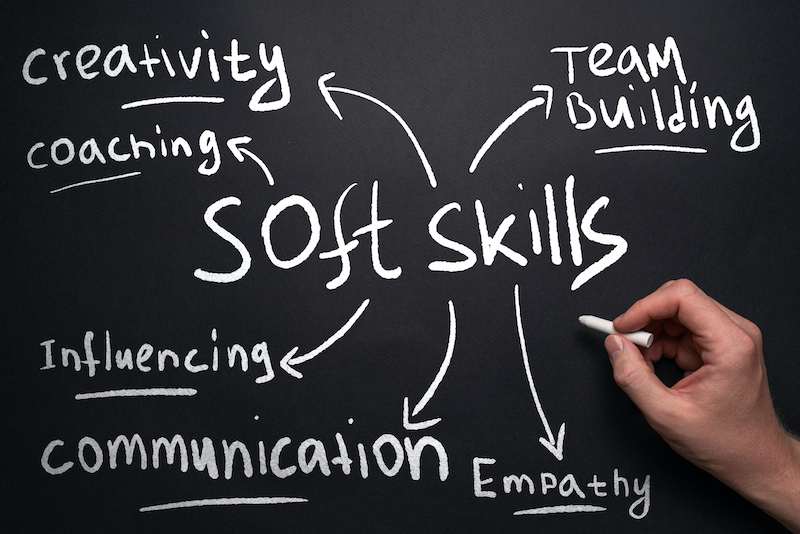
Beyond clarity, effective accountability requires regular coaching and feedback—not the kind reserved for annual reviews. Quick meetings to mark progress, course-correct early, and ask the right questions help keep employees on track and confident in their ability to succeed in their roles. When managers approach performance conversations with openness rather than judgement, employees are far more likely to be candid about obstacles and own their part in resolving them. And when consequences are reasonable and consistent, whether recognition for strong performance or accountability for persistent gaps, the whole system comes across as trustworthy rather than arbitrary.
5 Common Barriers to Employee Accountability
If employee accountability is so valuable, why do so many organizations struggle with it? The honest answer is that several deep-seated obstacles work against it, and most of them don’t get diagnosed clearly enough to be fixed. See below for 5 common barriers to employee accountability that you should be aware of.
1. Unclear roles and expectations
Many employees are unable to clearly articulate what their organization is trying to achieve. A manager can’t hold someone accountable for outcomes they never clearly understood in the first place. Yet many organizations assume expectations are self-evident. They’re not.
2. Lack of consistent feedback
Without regular, honest feedback, employees drift. They fill in the gaps with assumptions, often incorrect ones, about whether their performance is on track. By the time a formal review happens, it’s too late to course-correct in any meaningful way. Accountability requires an ongoing feedback loop, not a once-a-year reckoning.
3. Micromanagement
It looks like accountability enforcement on the surface, but micromanagement actually destroys the conditions for responsibility to grow. When managers hover over every decision and dictate every step, employees stop thinking like owners and start thinking like order-takers. People need to be trusted to figure out how to do their work, or they lose the sense of ownership that makes accountability possible.
4. Fear of failure
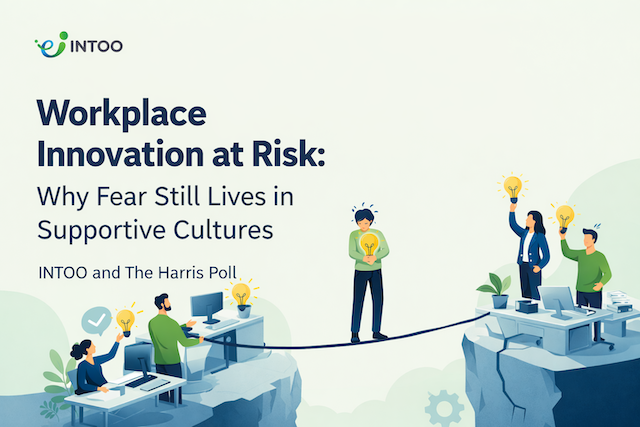
When the workplace culture treats mistakes as failures of character rather than opportunities for learning, employees become risk-averse. They stick to safe, predictable behaviors. They avoid raising issues early because doing so might reflect poorly on them. According to a study by INTOO and The Harris Poll, employees are even worried that they’ll lose their job if they make a mistake. That fear shuts down honest communication and makes people less, not more, accountable.
5. Inconsistent leadership
When rules seem to apply differently to different people and some employees face consequences for poor performance while others don’t, the message is clear: accountability isn’t really a cultural value here. High performers notice. They either disengage or leave, and both outcomes are costly.

How to Build a Culture of Employee Accountability
Building an accountability culture must be an ongoing discipline that is maintained to be effective. But the good news is that practical, proven strategies exist and they don’t require a culture overhaul to be useful.
Start with SMART goals. Goals that are Specific, Measurable, Achievable, Results-oriented, and Time-bound remove ambiguity from expectations. Instead of “improve customer satisfaction,” the goal becomes “increase NPS by 10 points in Q2 by addressing top service complaint categories.” That clarity gives employees something concrete to own and be proud of when they hit the goal.
Regular performance conversations are non-negotiable. Weekly or bi-weekly one-on-ones are part of accountability infrastructure. They give managers the opportunity to catch issues before they become crises and give employees a space to raise concerns without waiting for them to compound. The key is consistency. These conversations need to happen even when things are going well.
Empowering decision-making is equally critical. Accountability and autonomy are deeply connected. You can’t ask someone to own an outcome if you’re making all the decisions about how to achieve it. Involve employees in goal-setting so they feel a genuine investment in the targets. Let them determine the how, while you own the what and why. That shift from compliance to ownership is where accountability cultures really take root.
Finally, recognize accountability behaviors visibly and genuinely. Public recognition in team meetings, performance tied to rewards, and simply acknowledging when someone owned a hard situation—all of these reinforce the message that accountability is valued here, not just expected.
Turning Employee Accountability Into a Competitive Advantage
Organizations that get accountability right are more successful. When every person at every level takes ownership of their piece of the mission, execution gaps close. Teams move faster because there’s less friction, less need for supervision, and more trust flowing in every direction. High performers stay because they’re surrounded by colleagues who hold themselves to the same standards. And when things inevitably go wrong, accountable cultures recover faster because people focus on solutions instead of cover-ups.
Accountability isn’t a pressure campaign. It’s a commitment that leaders make first, model relentlessly, and extend to their teams through clarity, coaching, and trust. Build that foundation, and you’re not just building a better workplace, you’re building a resilient, high-performance organization that can sustain success over the long haul.
What if your managers need help being accountable? INTOO offers management training, coaching, and workshops that strengthen this and other vital leadership skills. Contact us today to learn how we can improve your culture of accountability.

INTOO staff writers come from diverse backgrounds and have extensive experience writing about topics that matter to the HR and business communities, including outplacement, layoffs, career development, internal mobility, candidate experience, succession planning, talent acquisition, and more.